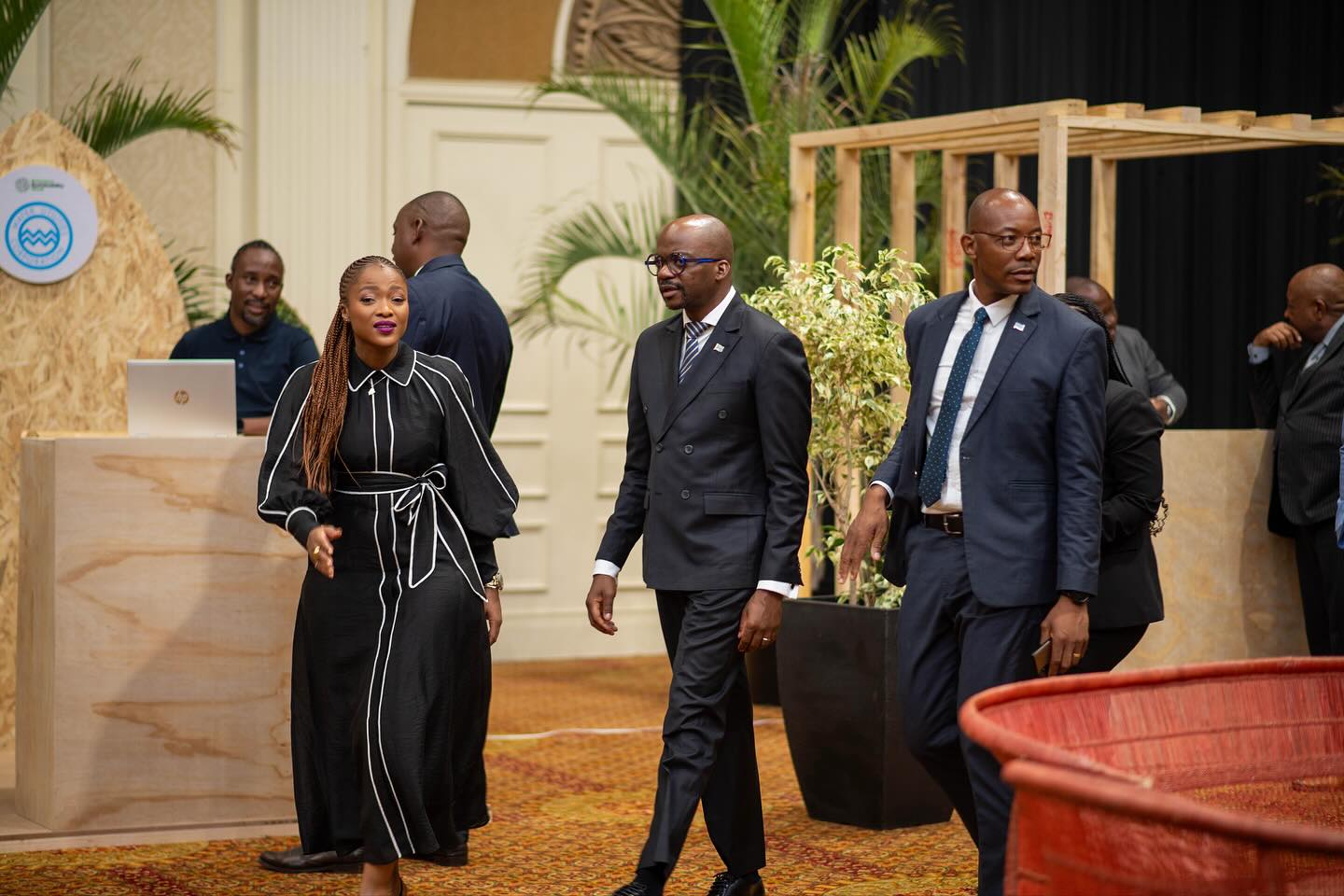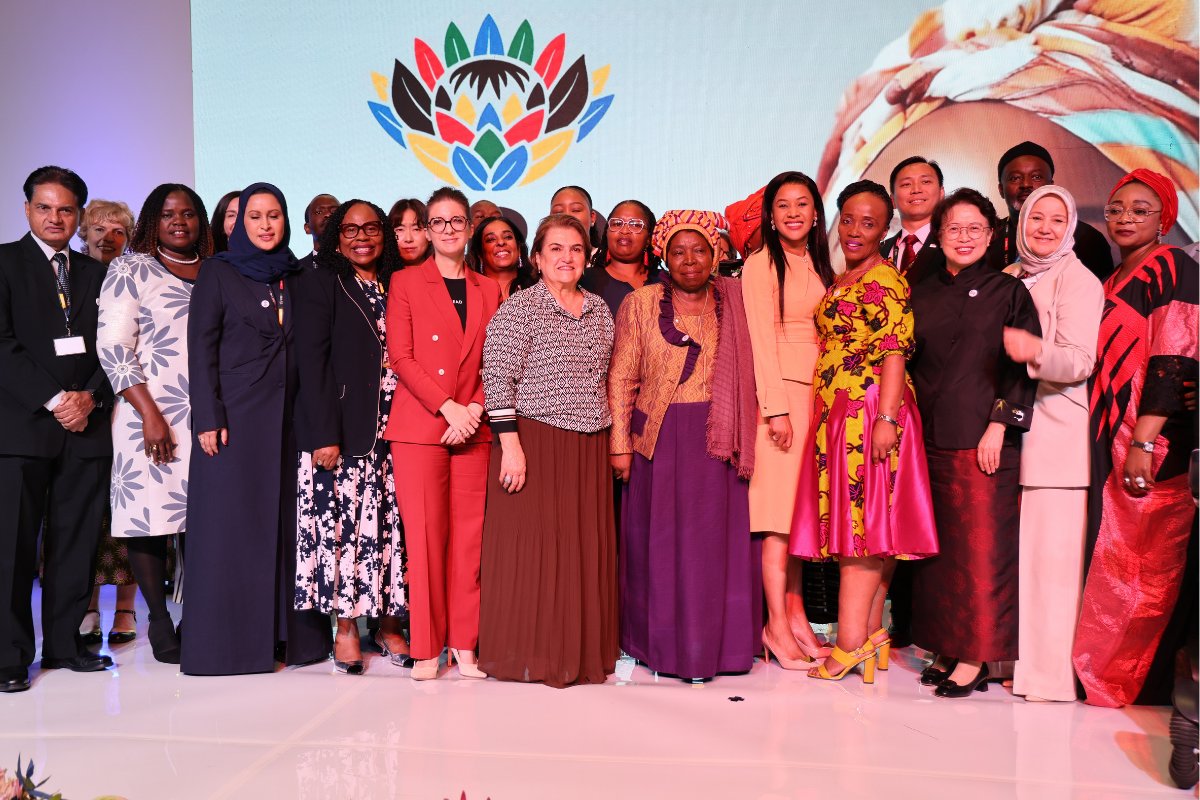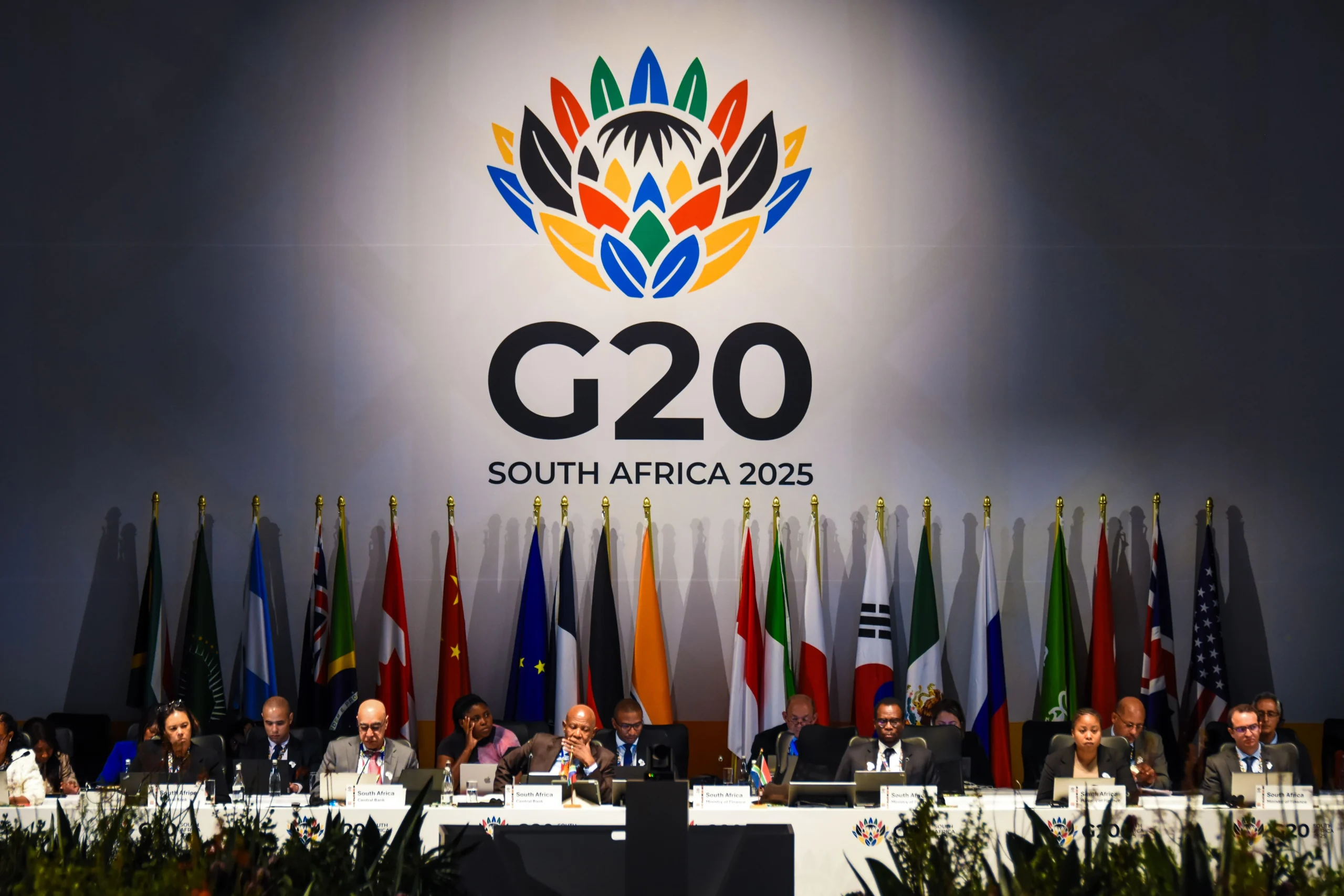
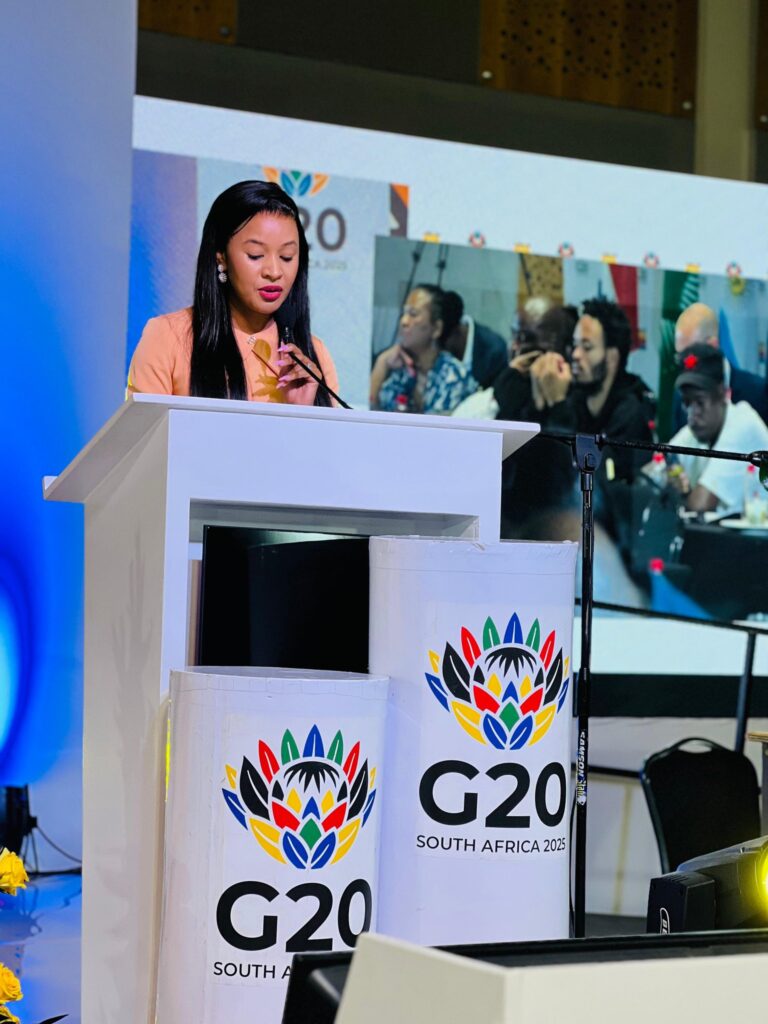
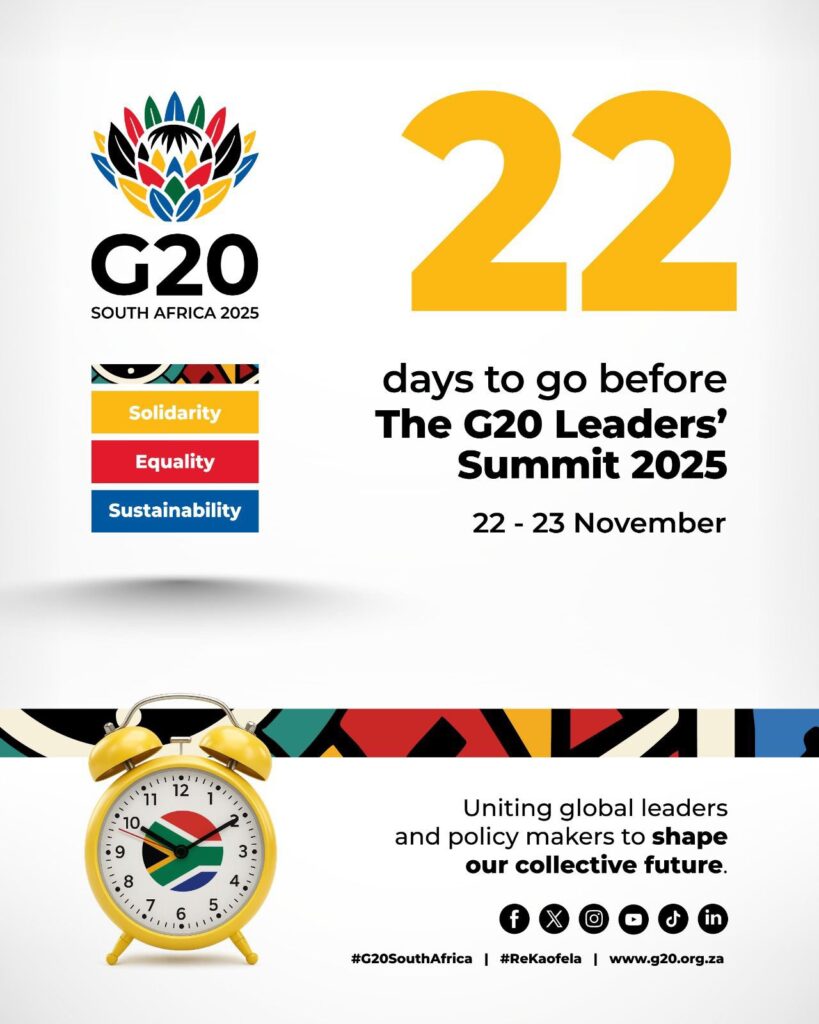
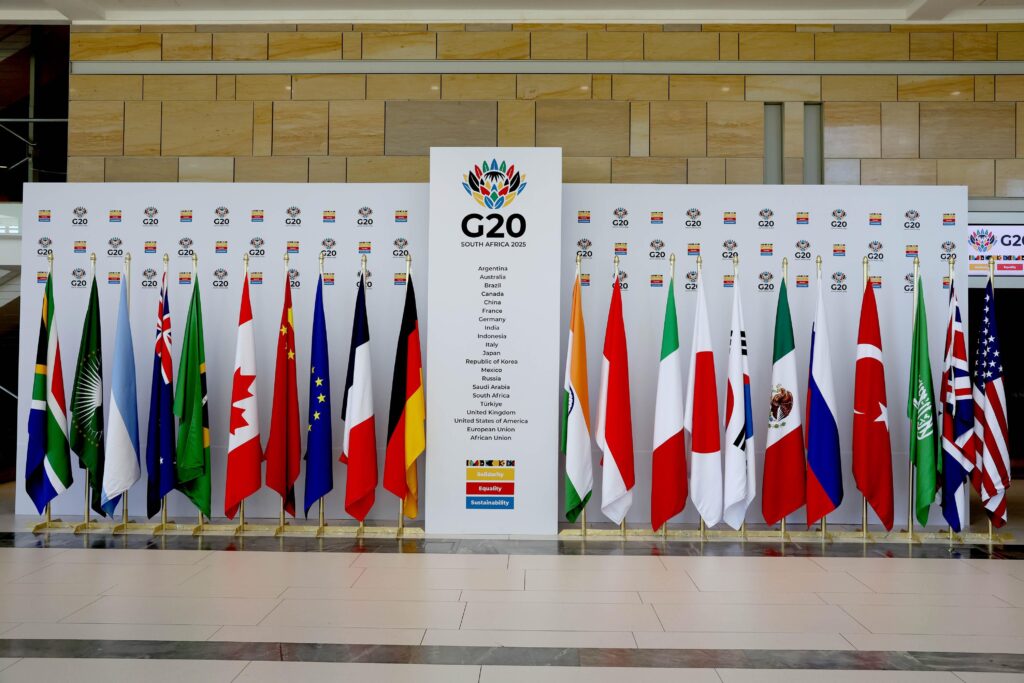
When global leaders converge in Johannesburg on 22–23 November 2025 for the G20 Leaders’ Summit, it will mark a turning point not only for South Africa but for the African continent. For the first time in its history, the G20 will convene on African soil — an acknowledgment of the continent’s growing geopolitical and economic influence.
Held under the theme “Solidarity, Equality, Sustainability,” the 2025 summit is expected to focus on five major priorities: debt sustainability, climate finance, resilience, critical minerals, and governance reform. These align closely with Africa’s developmental imperatives, positioning South Africa’s G20 Presidency — held from December 2024 to November 2025 — as a pivotal moment for advancing the African Union’s Agenda 2063 and recalibrating global governance to reflect emerging realities.
Reforming a Fragile Global Order
The summit takes place amid what the Department of International Relations and Cooperation (DIRCO) has described as “the erosion of multilateralism,” a growing threat to global stability and cooperation. South Africa’s presidency aims to restore collaborative momentum by reinforcing inclusive development and shared accountability among major economies.
A central agenda item will be debt reform — a lifeline for developing economies strained by escalating borrowing costs. Many African nations spend more on debt service than on essential social programmes such as education and healthcare. The G20 will therefore debate a new framework for debt sustainability and restructuring, ensuring low-income countries can recover without undermining public investment.
Parallel to this, the summit seeks to mobilise climate finance. South Africa will advocate for expanded funding toward a just energy transition and greater adaptation support for climate-vulnerable regions. According to the UN Environment Programme, Africa requires at least US$250 billion annually by 2030 to meet adaptation needs, yet current global commitments fall well below this target.
Green Industrialisation and Critical Minerals
Johannesburg’s summit will also highlight critical minerals, essential for technologies driving the green economy — from electric vehicles to renewable power systems. The G20 is expected to endorse a framework for fair and inclusive green industrialisation, ensuring that mineral-rich nations in Africa benefit equitably from global supply chains.
This strategy directly complements the African Continental Free Trade Area (AfCFTA), which seeks to strengthen intra-African trade and attract foreign direct investment by building a unified market of more than 1.4 billion people. By aligning mineral development with regional trade policy, the G20’s outcomes could redefine Africa’s industrial trajectory for decades to come.
A R700 Million Investment in Global Diplomacy
Hosting the G20 comes with substantial costs and expectations. South Africa has budgeted over R700 million to stage the summit and its 130 associated meetings throughout 2025. Funding will be shared between the national government and private-sector partners, covering logistics, security, and hospitality at the NASREC Expo Centre — the venue for the main deliberations.
According to DIRCO, South Africa as the host nation covers accommodation and local transport for visiting heads of state and delegations, while individual countries and international organisations fund their own participation. The spending, however, is projected to generate meaningful returns through a surge in tourism, event-driven commerce, and local supply contracts across Gauteng.
Economic Ripple Effects for Citizens
For ordinary citizens, the benefits will unfold in both immediate and long-term phases. Economists expect a temporary boost in employment and small-business activity, particularly in the hospitality, transport, and creative industries servicing the summit.
More significantly, policy gains achieved at the G20 — such as improved access to climate finance and fairer debt terms — could unlock public resources for infrastructure, education, and healthcare, directly improving socio-economic resilience.
The presidency also intends to advance measures against illicit financial flows, which cost Africa an estimated US$88.6 billion annually, according to the UN Economic Commission for Africa. Tackling these leakages could bolster fiscal capacity and accountability within African economies.
Africa’s Moment on the World Stage
Beyond the economic dividends, the symbolism of hosting the G20 in Johannesburg is historic. It signals a redistribution of global influence and acknowledges Africa’s indispensable role in confronting shared global challenges — from climate shocks to digital governance.
By amplifying Africa’s collective voice, South Africa’s presidency aims to reform international institutions — from the United Nations to the Bretton Woods system — to ensure they reflect a multipolar, representative world order.
As the G20 Summit 2025 approaches, Johannesburg stands as the arena where Africa asserts not only its grievances but its vision: a continent seeking equitable partnership, sustainable growth, and a future anchored in solidarity, equality, and shared prosperity.