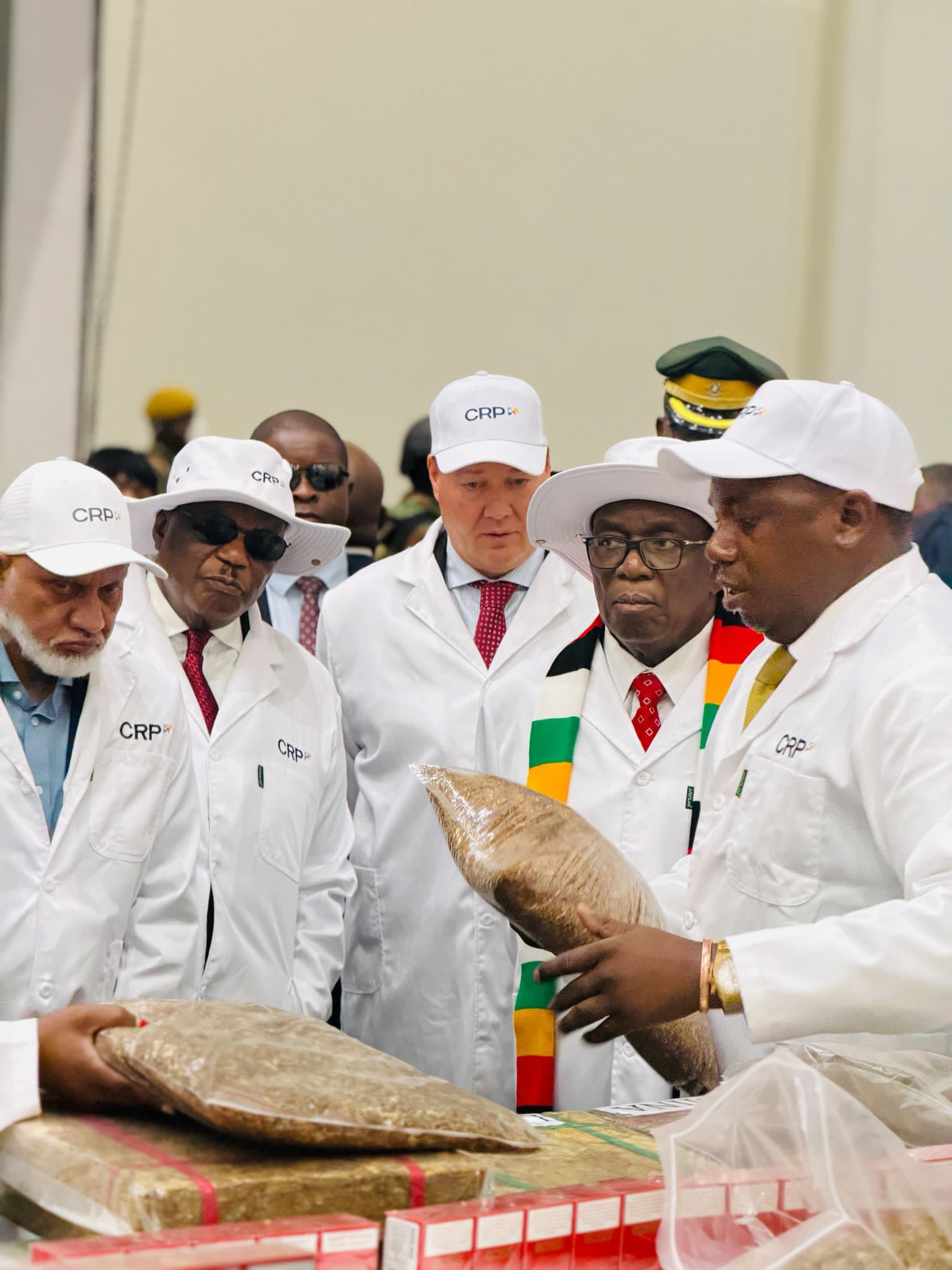
Zimbabwe has taken another step in its industrialization agenda with the commissioning of a US$102 million Integrated Tobacco Facility in Harare, a development government officials described as central to boosting value addition and strengthening investor confidence in the economy. President Emmerson Mnangagwa inaugurated the Cut Rag Processors plant, positioning it as a cornerstone of the country’s transition from exporting raw commodities to producing higher-value finished goods.
The commissioning drew senior members of government, signalling broad political support for the project. Among those in attendance were Vice President Constantino Chiwenga, Defence Minister Oppah Muchinguri-Kashiri, Industry and Commerce Minister Nqobizitha Mangaliso Ndhlovu, Information Minister Jenfan Muswere, Agriculture Minister Anxious Masuka, and Harare Metropolitan Provincial Affairs Minister Charles Tavengwa. Their participation underscored the state’s focus on accelerating economic modernization in line with national development priorities.
Mnangagwa used the event to reiterate his administration’s commitment to reducing regulatory hurdles that have historically impeded investment. He pointed to ongoing reforms to streamline licenses, permits, and statutory processes as part of efforts to create a more predictable and competitive business environment.
Cut Rag Processors, founded in 2000, has grown into a key player in Zimbabwe’s tobacco value chain. The new facility is expected to enhance the country’s capacity to produce premium processed tobacco for export, reinforcing a long-term strategy to shift from primary production to industrial value addition. Tobacco remains one of Zimbabwe’s most significant economic pillars, supporting more than 160,000 households from farming through to processing.
Government officials emphasized the importance of adopting climate-smart agricultural practices and modern technologies to secure the sector’s sustainability. With climate variability increasingly affecting yields, the state has framed technological innovation as essential to preserving the country’s global competitiveness in tobacco production.
The facility’s commissioning marks continued progress in efforts to improve the ease of doing business and attract both local and international investors. As Zimbabwe seeks to diversify its industrial base, the new plant represents a tangible signal of its intention to rebuild manufacturing capacity and promote inclusive economic growth.