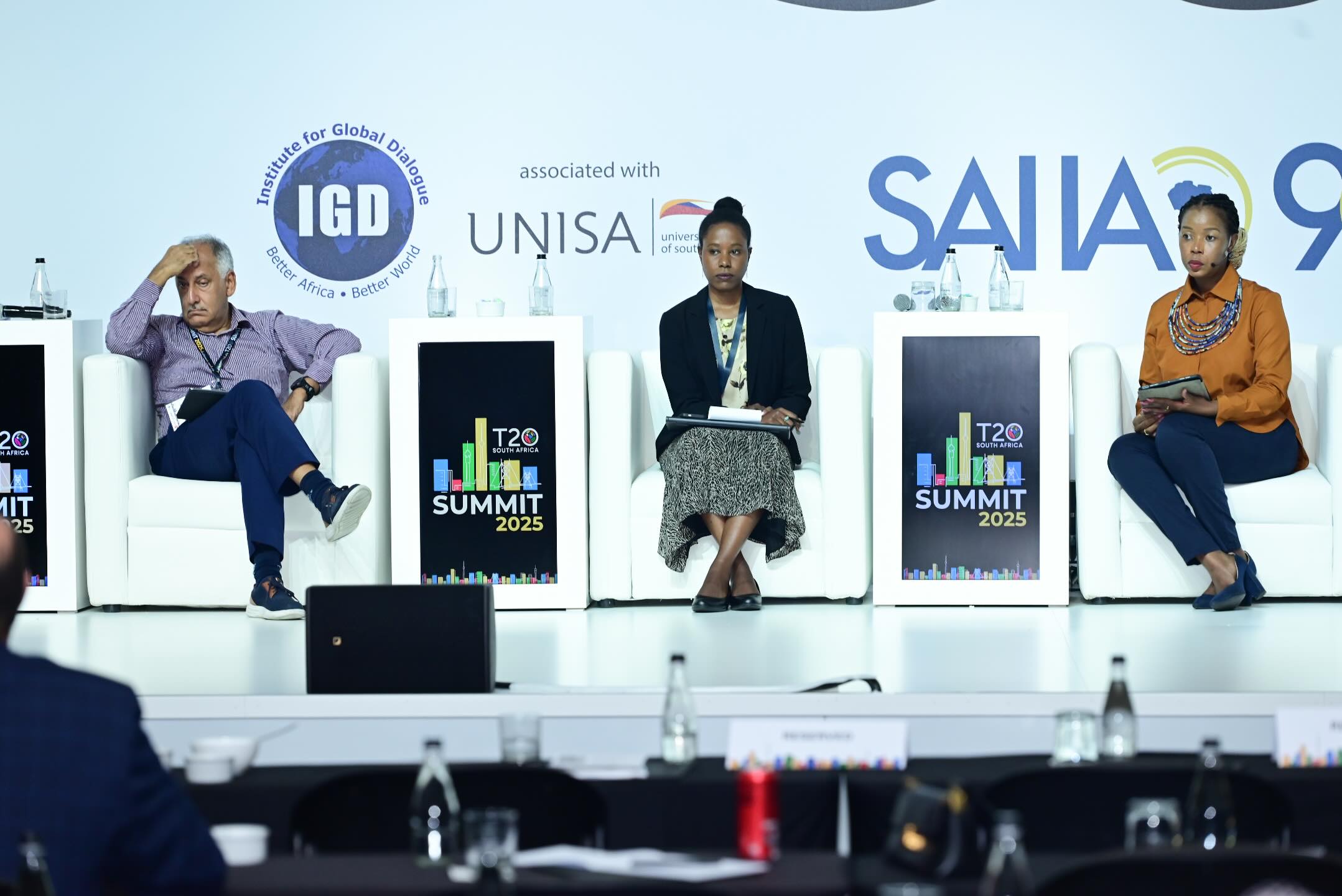
The Think20 Summit in Johannesburg closed with a decisive call for the G20 to reinforce its internal structures, arguing that the forum’s long-term relevance depends on its ability to track implementation, measure impact, and sustain policy continuity. The recommendations outlined in the T20 Communiqué were explicit: at twenty years, the G20’s most strategic investment is in itself.
Across the policy sessions, researchers highlighted a persistent gap between G20 commitments and delivery. Earlier this year, experts consolidated these proposals into a set of High-Level Recommendations, urging the forum to introduce structured monitoring for climate finance, debt restructuring, digital public infrastructure, and social protection. They argued that many commitments weaken or disappear entirely as presidencies rotate, leaving no common reporting discipline or shared accountability mechanism.
South Africa’s presidency used the summit to anchor a reform agenda centred on transparency and structural consistency. Its proposed framework, detailed in the Revised G20 Discussion Paper, calls for harmonized reporting templates, unified financial disclosure standards, and a small, technical implementation unit capable of publishing regular performance scorecards across presidencies. Analysts described this as a realistic, incremental pathway to strengthening the G20 without altering its informal character.

Research teams from ISS Africa, SAIIA, and regional economic institutions stressed that Africa’s influence within the G20 will depend on whether the grouping can produce demonstrable results in areas that matter to developing economies—debt sustainability, energy transition financing, and resilient social systems. Discussions recorded on the T20 Summit programme page show consistent concerns about the widening credibility gap between G20 communiqués and on-the-ground delivery, especially in low-income regions.
The reform logic has been outlined across multiple policy papers. The T20 Concept Note sets out the institutional rationale for a more coherent G20 system, arguing that predictability and measurable evaluation are essential if the forum is to maintain legitimacy in an era of geopolitical fragmentation. Delegates maintained that such reforms would not constrain member flexibility but would instead create a shared baseline for impact measurement.
As South Africa prepares to table these proposals at the Leaders’ Summit, the implications are substantial. Adoption of even the first phase—unified reporting, a pilot implementation scorecard, and formal cross-presidency tracking—would reposition the G20 from a forum known for declarations to one defined by systematic accountability.
Whether Johannesburg becomes a turning point will depend on the political will of members to embed these reforms into the institution’s next decade.