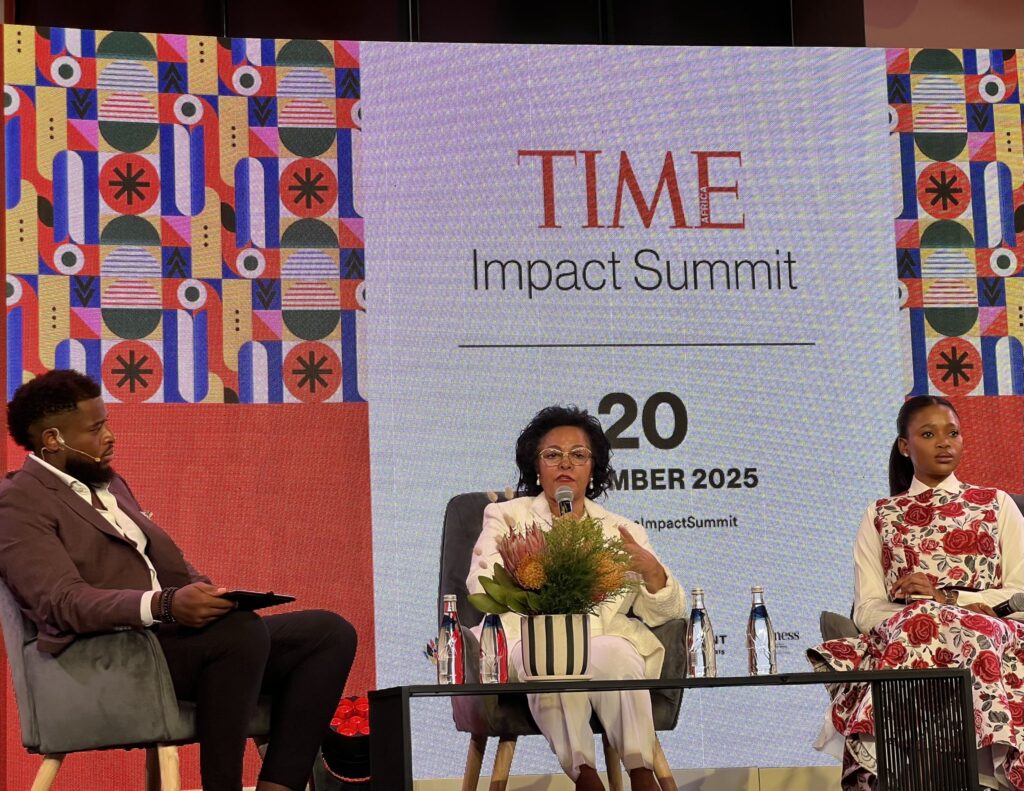
AUDA-NEPAD used its platform at the TIME Africa Impact Summit to press for a continent-wide skills revolution, describing youth capability development as the determining factor of Africa’s economic future. Chief Executive Officer Nardos Bekele-Thomas argued that African countries must urgently build the talent pipelines required for an economy increasingly shaped by artificial intelligence, digital innovation, engineering, and emerging technologies.
Bekele-Thomas said recent work in Lusaka through the Integrated Skills for the Workforce in Africa (ISWA) program demonstrates that meaningful progress is possible when employers, training institutions, and investors collaborate to match young people with direct opportunities. According to AUDA-NEPAD, the model showcases a replicable pathway for large-scale youth empowerment anchored in industry demand and aligned with the continent’s long-term development frameworks.
Her address linked the skills agenda to Africa’s control over its strategic resources. She stressed that the continent’s critical minerals—essential to global supply chains for clean energy and digital technologies—must be leveraged in ways that place Africans at the centre of value creation rather than at the margins. The call aligns with broader AU frameworks, including Agenda 2063 and the African Continental Free Trade Area, which seek to strengthen intra-African trade, industrial capacity, and regional integration.
Bekele-Thomas also situated Africa’s current trajectory within a longer history of institutional reforms, noting that the continent has been shaping its own development agenda for decades. She said Africa’s shift from aid dependence to global co-creation is reflected in ongoing efforts to establish a unified energy market, expand manufacturing value chains, and build the governance systems required to anchor sustained growth.

The TIME Africa Impact Summit brought together policymakers, investors, and development leaders to assess Africa’s role in global decision-making. AUDA-NEPAD’s message positioned skills development as the strategic foundation for unlocking long-term competitiveness, ensuring that the continent’s demographic advantage becomes a source of continental strength rather than vulnerability.
Bekele-Thomas concluded that Africa’s youth must be equipped not only to participate in the new economy but to define it, emphasising that the continent’s future influence will depend on how effectively it prepares its workforce today.