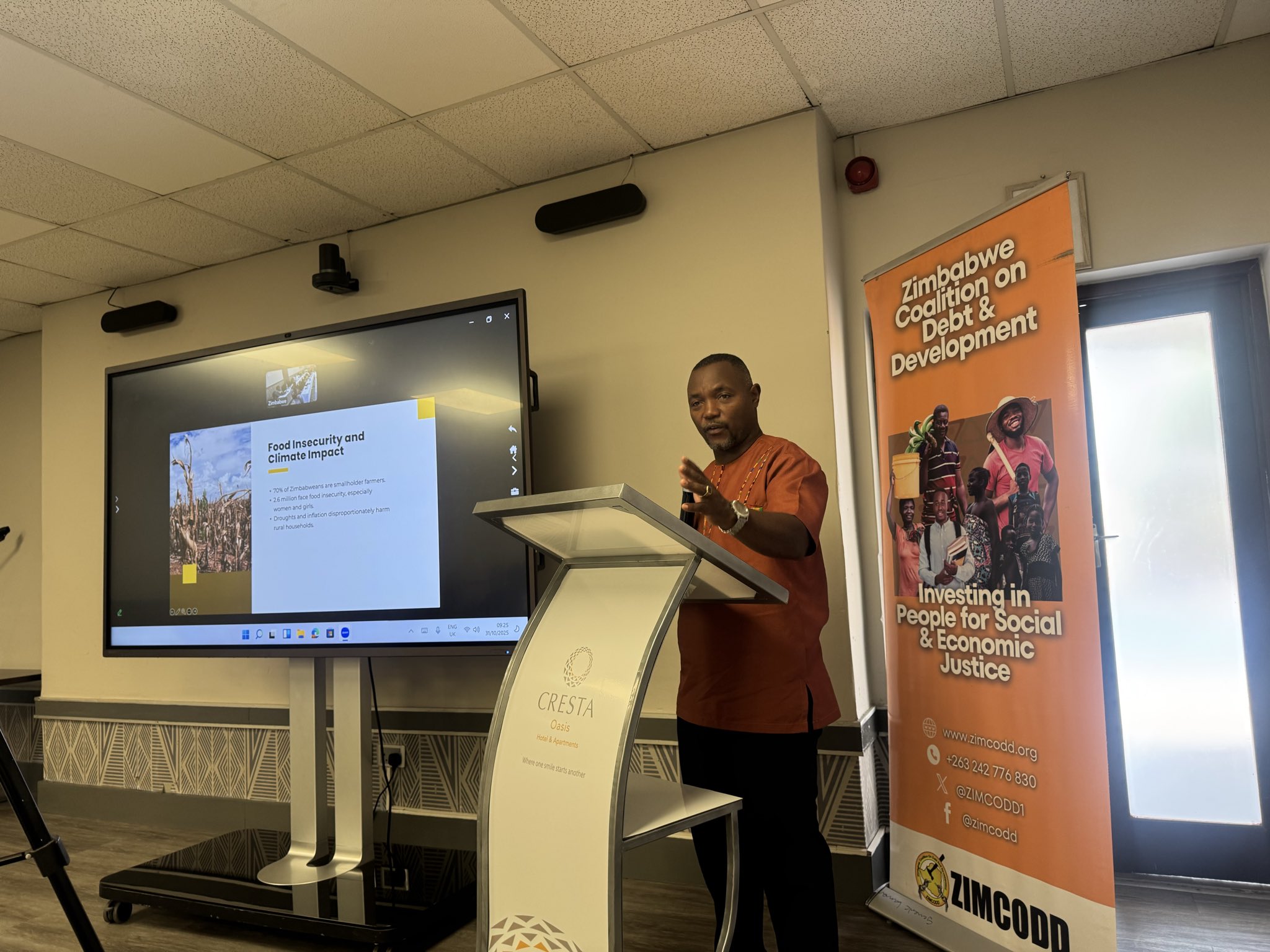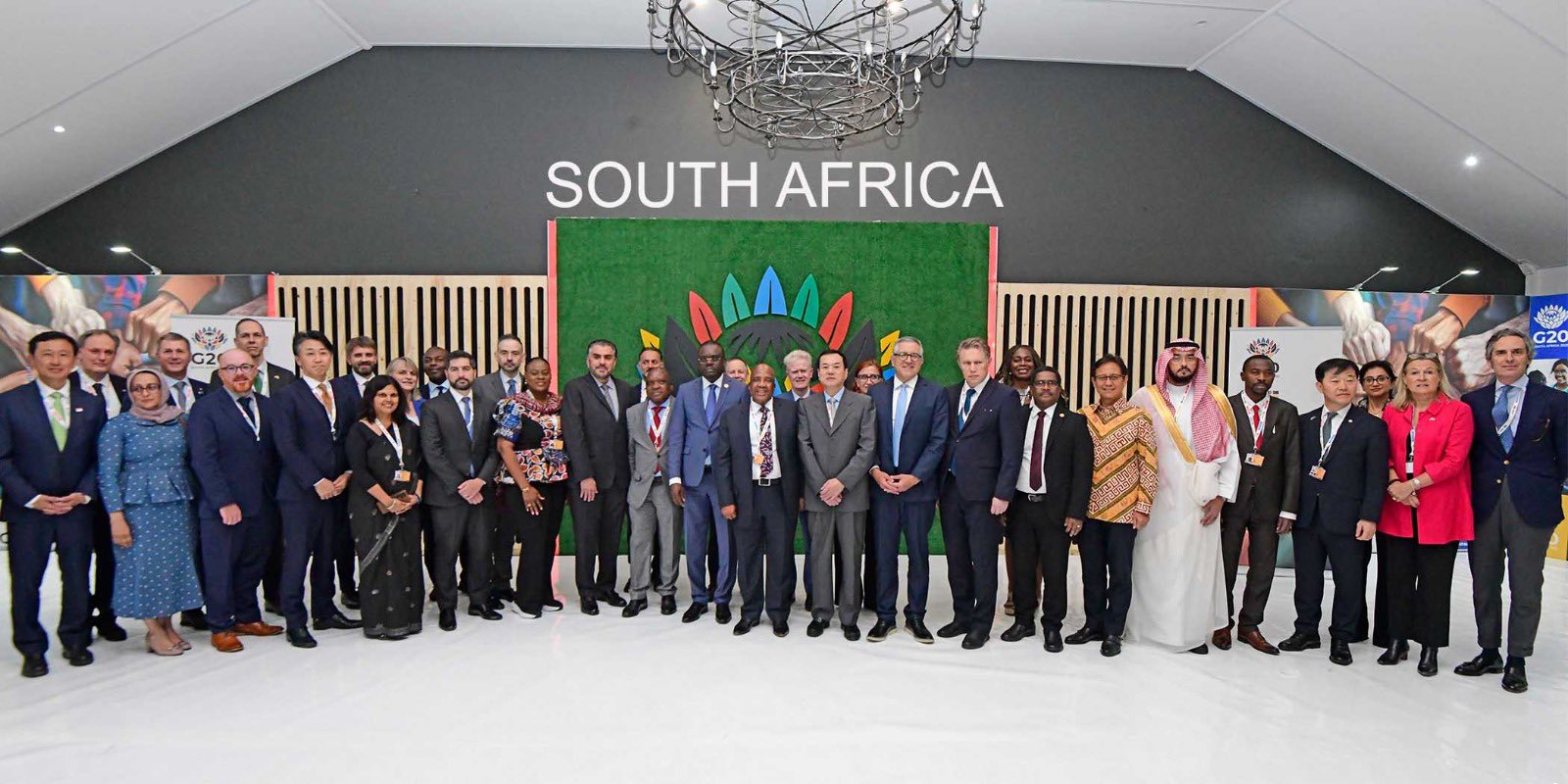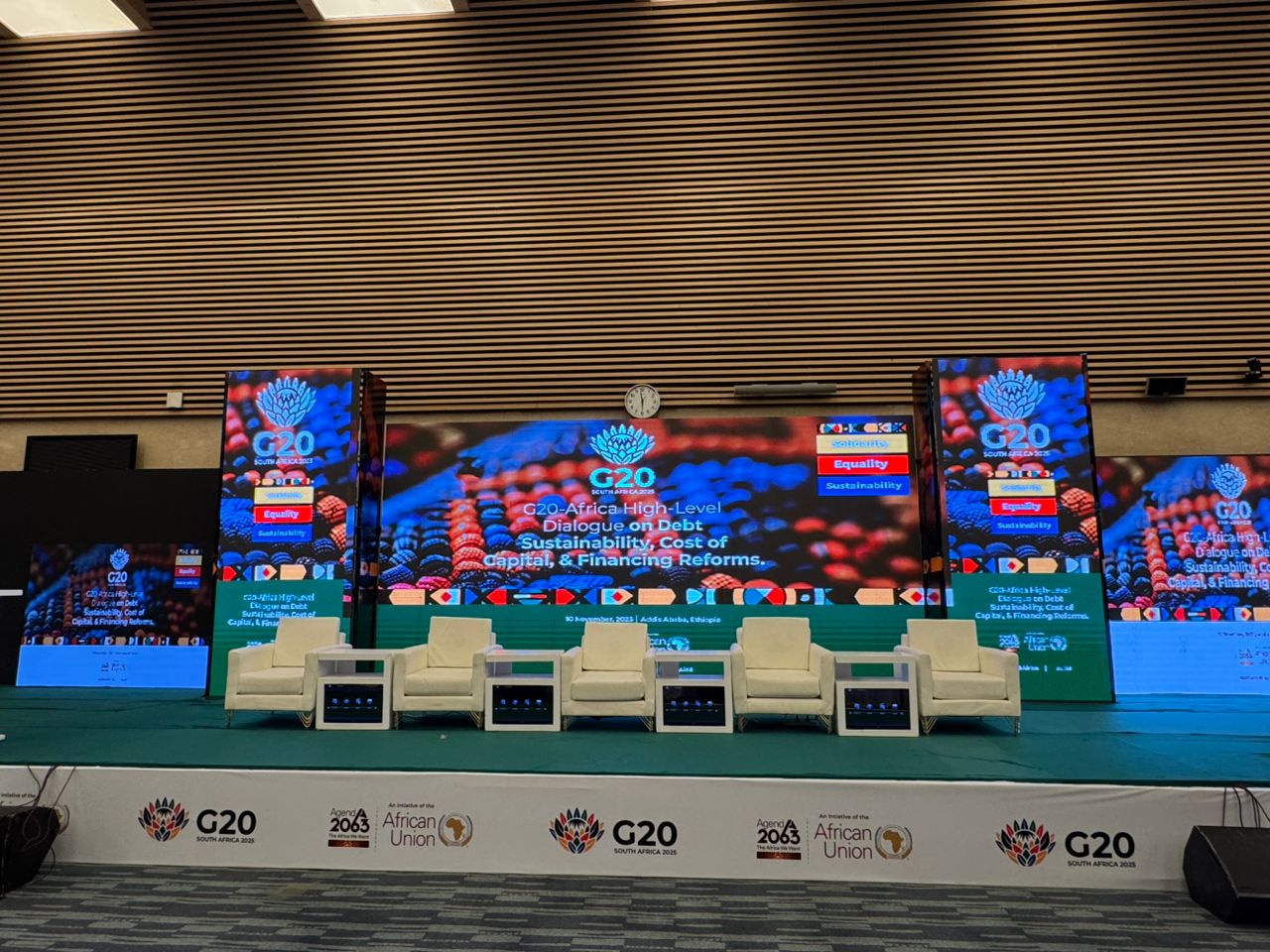
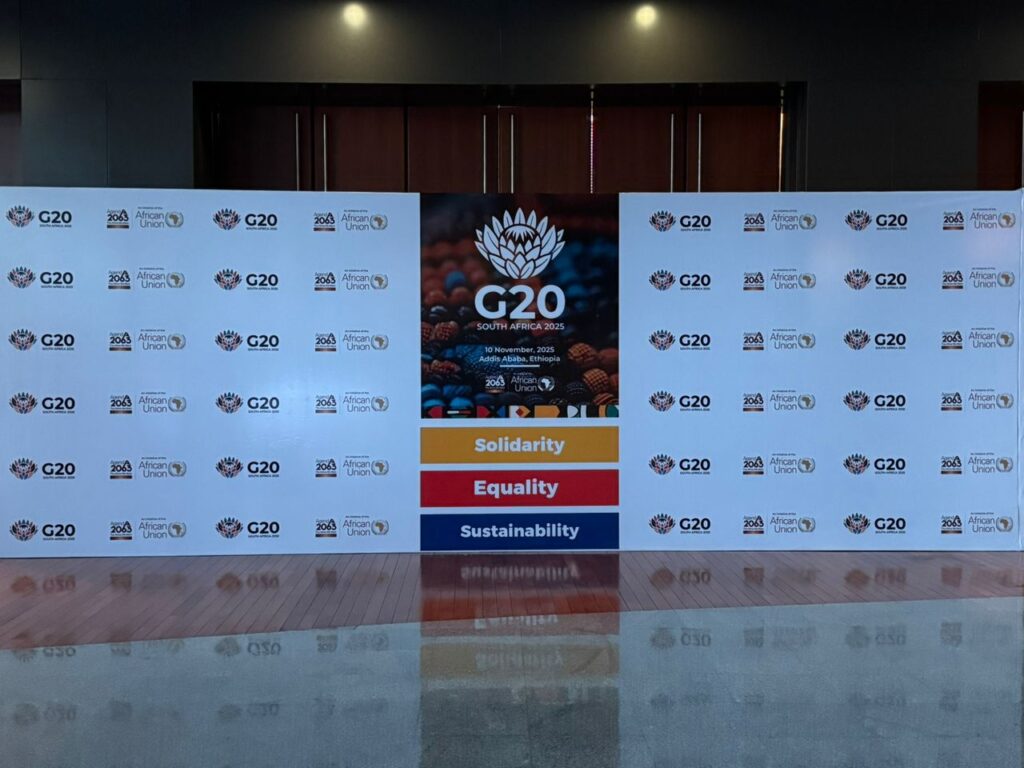
The African Union (AU) hosted the G20–Africa High-Level Dialogue on Debt Sustainability, Cost of Capital and Financing Reforms on 10 November 2025 at its headquarters in Addis Ababa, convening ministers, development finance experts, and global policymakers to address the structural inequities defining Africa’s access to global capital. The meeting formed part of the South African G20 Presidency, which has prioritised financial inclusion and equitable growth under the theme “Solidarity, Equality, Sustainability.”
The dialogue, organised by the African Union Commission (AUC) in partnership with G20 member states, centred on aligning Africa’s financing needs with ongoing international reform efforts. According to the AU’s official statement, the meeting sought to “amplify Africa’s collective voice within the G20” by addressing the unsustainable cost of borrowing, restructuring debt obligations, and increasing the continent’s participation in global decision-making forums.

Reforming the Financial Architecture
Africa’s total public debt reached US$1.8 trillion in 2024, with several countries spending more on servicing debt than on health or education. At the dialogue, policymakers stressed the urgency of reforming credit-rating systems, which often label African economies as high-risk despite stable macroeconomic indicators. As reported by Reuters, G20 members reaffirmed commitments to address developing countries’ debt challenges but acknowledged the need for more comprehensive, transparent frameworks.
The opening session featured remarks from Mr. Masotsha Mnguni, who directed the programme, H.E. Mr. Alvin Botes, South Africa’s Deputy Minister of International Relations and Cooperation, H.E. Mrs. Francisca Tatchouop Belobe, AUC Commissioner for Economic Development, Trade, Tourism, Industry and Minerals, and Mr. Samuel Gbaydee Doe, UNDP Resident Representative in Ethiopia. Each called for restructuring global financial systems to ensure Africa can attract long-term, affordable investment capital.
Africa’s Call for Fair Financing
Deputy Minister Botes emphasised that Africa’s development trajectory depends on “equal access to global capital markets and reforms that recognise our structural realities.” His remarks echoed the AU’s stance that high borrowing costs—averaging 9% for African sovereign bonds compared to 1.5% in Europe—undermine sustainable growth. The UNDP highlighted that the dialogue aligns with Africa’s Agenda 2063, which envisions self-reliant, industrialised economies powered by innovation and equitable trade.
Commissioner Belobe reiterated that “Africa is not seeking charity but fair participation.” She urged that the continent’s debt sustainability frameworks consider investment in climate adaptation, green transitions, and social infrastructure rather than focusing solely on austerity measures.
Structural Barriers and Strategic Priorities
The African Union Commission noted that Africa’s financing costs are often inflated by “perception risks” rather than objective data. Credit-rating agencies’ methodologies, combined with limited representation in Bretton Woods institutions, continue to disadvantage African states. Moreover, limited liquidity in domestic financial markets constrains the continent’s capacity to self-finance major infrastructure projects.
The dialogue called for:
- A fairer global credit-rating system, possibly through an African-led rating agency that better reflects regional economic realities.
- Debt transparency mechanisms to prevent hidden liabilities and ensure accountability in public borrowing.
- Increased concessional financing, particularly for green energy, digital infrastructure, and food security.
- Reform of multilateral institutions, ensuring Africa gains stronger representation and voting power within the G20 and International Monetary Fund (IMF).
Global Context
The meeting took place amid renewed scrutiny of G20 progress on debt issues. In October, Reuters reported that civil society groups had criticised the lack of tangible progress during South Africa’s G20 presidency, warning that “debt diplomacy without structural reform” risks leaving African economies vulnerable. Similarly, Prensa Latina noted that the Addis Ababa dialogue signalled Africa’s determination to move from advocacy to concrete policy intervention.
The Road Ahead
The dialogue’s outcomes will feed into the G20 Johannesburg Summit scheduled for late November 2025, where African leaders aim to secure commitments on concessional financing, climate-resilient debt restructuring, and the inclusion of African priorities in the G20 Framework for Strong, Sustainable, Balanced, and Inclusive Growth.
If implemented, the proposed reforms could reshape Africa’s financial standing—reducing borrowing costs, strengthening fiscal sovereignty, and positioning the continent as an equal stakeholder in the evolving global economic order.
In the words of one AU delegate, the Addis Ababa meeting “marks a turning point—not just for debt relief, but for rewriting the rules of global finance to serve Africa’s future.”