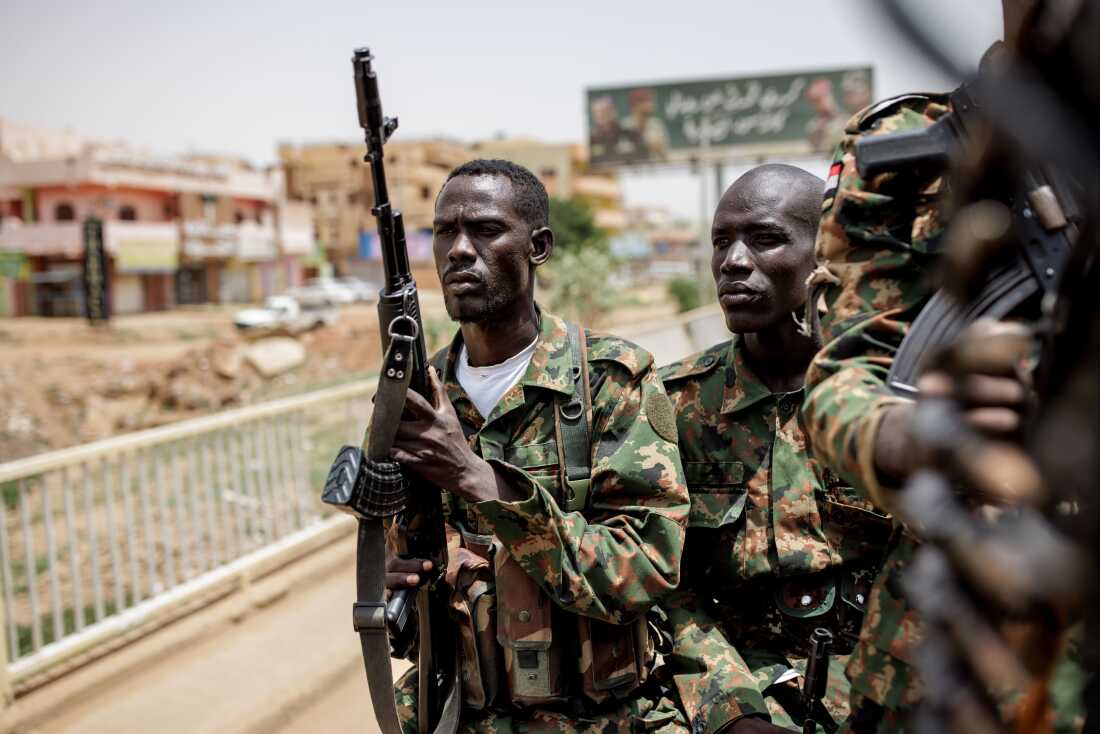
Sudan is unraveling before the world’s eyes. What began in April 2023 as a power struggle between Gen Abdel Fattah al-Burhan’s Sudanese Armed Forces (SAF) and Gen Mohamed Hamdan Dagalo’s Rapid Support Forces (RSF) has metastasized into one of the worst humanitarian crises in modern history. By late October 2025, the fall of El Fasher, the capital of North Darfur, to the RSF marked a grim milestone — a city that had withstood an 18-month siege reduced to ruins, its civilians trapped between starvation and slaughter.
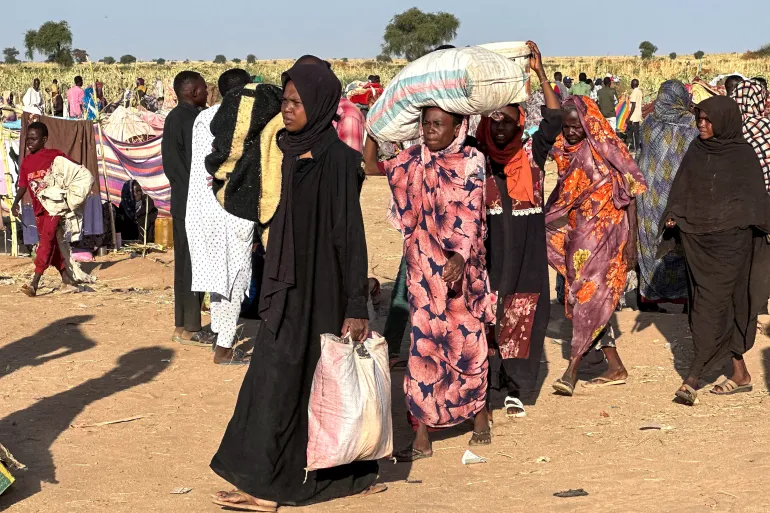
According to BBC News, more than 150,000 people have died since fighting began, while the United Nations describes Sudan as “the world’s largest displacement crisis,” with 12 million people forced to flee their homes. Over 30 million Sudanese, more than half the population, now require urgent humanitarian assistance. Famine conditions stretch across vast territories, leaving more people facing starvation in Sudan than in the rest of the world combined, the World Food Programme warns.
The Anatomy of Collaps
The roots of Sudan’s implosion trace back to the unfinished revolution of 2019. The ousting of Omar al-Bashir after three decades of dictatorship briefly promised civilian governance. Instead, a fragile power-sharing deal between the army and civilians was toppled by a coup in October 2021, orchestrated by the same generals now warring for supremacy.
When clashes erupted in April 2023, the RSF — descended from the notorious Janjaweed militias accused of genocide in Darfur two decades ago — quickly seized parts of Khartoum and western Sudan. The SAF eventually reclaimed the capital in March 2025, but not before the city was gutted: hospitals bombed, ministries torched, and neighbourhoods turned to ash.
The RSF’s capture of El Fasher extends its control over nearly all of Darfur and swathes of Kordofan, consolidating a de facto partition of the country. With Sudan’s army-backed government entrenched in Port Sudan and the RSF forming a rival administration, the spectre of another national breakup looms — echoing the secession of South Sudan in 2011, which claimed most of Sudan’s oil wealth.
Humanitarian Devastation
What distinguishes Sudan’s war is the scale and methodical nature of civilian suffering. Aid workers from Médecins Sans Frontières describe widespread sexual violence, targeted executions, and starvation tactics. Over 80% of hospitals in conflict zones are no longer functioning. Cholera, malaria, and malnutrition are rampant. Humanitarian convoys are routinely blocked or looted by both sides, cutting off millions from relief.
In Darfur, the United States determined in January 2025 that the RSF and allied militias had committed genocide against non-Arab ethnic groups, including the Massalit. Testimonies gathered by Human Rights Watch detail systematic killings and mass rapes, with perpetrators taunting victims that they would “bear Arab babies.”
The UN Office for the Coordination of Humanitarian Affairs estimates that famine conditions in Darfur and Kordofan will soon reach catastrophic levels without immediate, large-scale intervention.
A Failure of Global Conscience
Diplomatic efforts have faltered repeatedly. Peace talks in Saudi Arabia and Bahrain yielded no ceasefire. The International Crisis Group has called the world’s response “lacklustre,” while Amnesty International deemed it “woefully inadequate.”
Part of the paralysis stems from geopolitical entanglements. The RSF is allegedly funded and armed by the United Arab Emirates, a claim denied by Abu Dhabi. The SAF enjoys backing from Egypt, which sees Sudan’s stability as vital to its Nile security. These rival alliances mirror broader regional rivalries, turning Sudan into a proxy battlefield for influence and resources — particularly gold and Red Sea access.
Yet beyond politics lies a moral void. As WHO Director-General Tedros Adhanom Ghebreyesus noted in a 2024 interview, global empathy has waned: “There is less interest in African wars. I think race is in play here.”
The Silence Before the Shatter
If left unchecked, Sudan could fracture irreversibly — into a mosaic of armed fiefdoms governed by militias and warlords. The UN Security Council has warned that the conflict risks destabilizing the entire Horn of Africa, already burdened by refugee flows and food insecurity.
For ordinary Sudanese, survival is now a daily calculation between flight and famine. In El Fasher, residents who escaped the siege told the BBC that corpses line the streets, aid warehouses are empty, and children are dying unseen.
This war is not merely about two generals or a failed revolution. It is a mirror of international fatigue — the quiet tolerance of another African tragedy while the world looks elsewhere.
Unless a comprehensive ceasefire, humanitarian corridor, and international accountability mechanism are enforced immediately, Sudan may not only collapse as a state but vanish as a society.