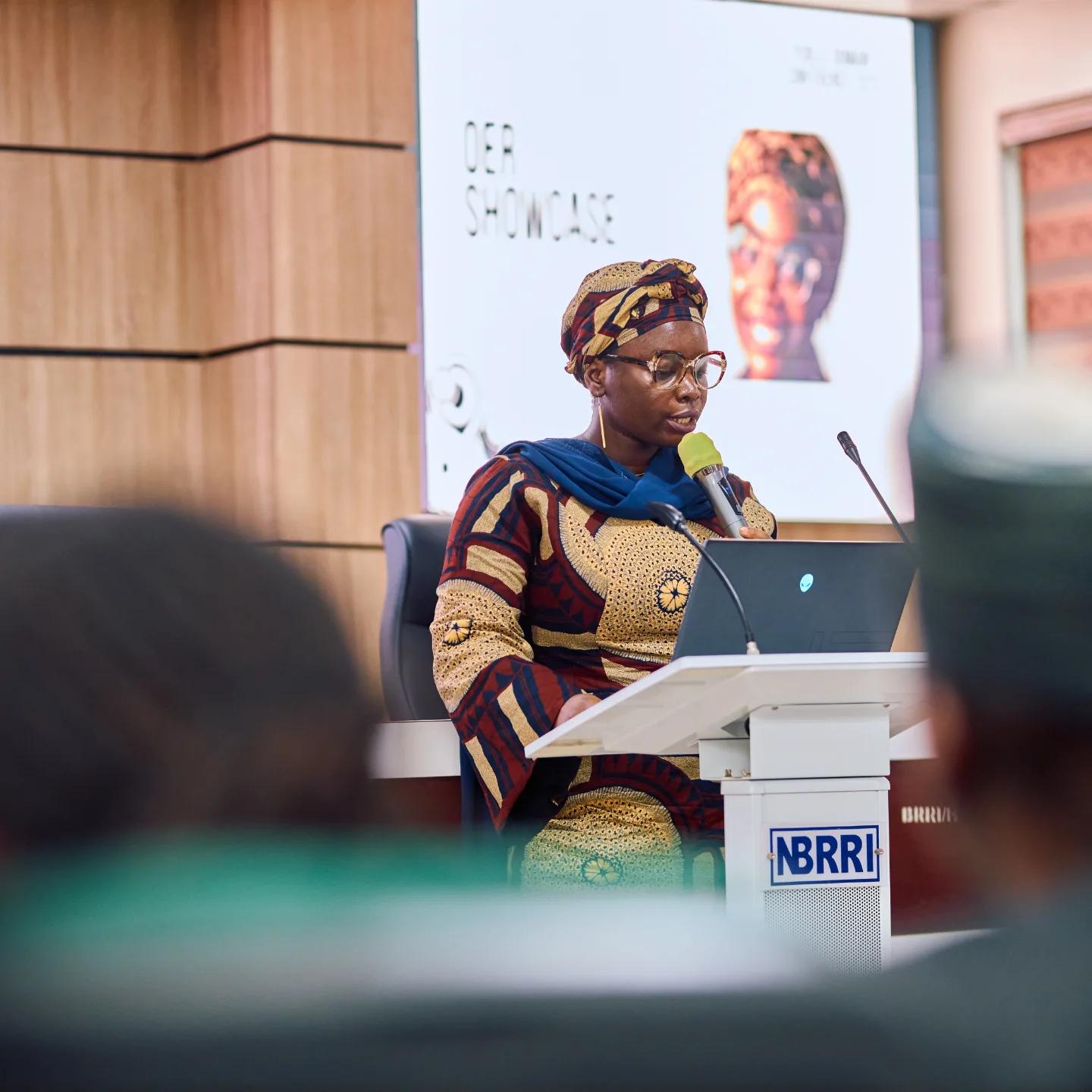
At the recent Public Domain Conference 2025, Free Knowledge Africa spotlighted the achievements of open education advocate Aderonke Abdul, who presented a standout project illustrating how freely accessible, openly licensed learning tools can transform education and research across the continent.
Free Knowledge Africa, a non-profit organisation promoting African-generated knowledge through open collaboration, has positioned itself at the forefront of the Open Educational Resources (OER) movement. Its programmes focus on equipping educators and researchers with digital skills to adapt and distribute content under open licences, reducing the cost barriers to quality learning materials.
Aderonke’s showcase built on training received through the organisation’s OER cohort, where participants learned to curate and adapt existing open content—from textbooks and research articles to multimedia resources—into accessible, context-driven educational tools. Her demonstration highlighted how OERs can bridge long-standing inequalities in access to academic materials, particularly for students and institutions in low-resource environments.
The initiative aligns with ongoing efforts by the UNESCO OER Recommendation, which encourages African countries to adopt open education policies and integrate digital commons into national education systems. Several governments have begun developing frameworks to localise OER content, promote open licensing, and foster cross-border collaboration.
By featuring community-driven projects such as Aderonke’s, Free Knowledge Africa continues to reinforce the importance of digital inclusion and knowledge equity. As access to data, research, and tools becomes increasingly critical to Africa’s development agenda, the organisation’s work underscores that open education is not merely a technical framework but a movement toward intellectual self-determination.
Future iterations of the OER cohort are expected to expand their reach, offering mentorship and publishing support for African educators, creators, and researchers. The long-term vision is to establish a sustainable ecosystem where open access becomes standard practice, ensuring that knowledge produced in Africa remains freely available and globally visible.